Platform
Jobs and Economy
Problem:
Our economy faces serious challenges: tourism is declining, unemployment is rising, and local businesses are struggling with high costs and complex regulations. AI is reshaping our economy. Employers can’t find skilled workers, while our residents can’t find jobs that pay a living wage. There’s a mismatch between our workforce and our economy’s needs.
Solution:
As County Commissioner, Minja will create a streamlined, "One-Stop-Shop" concierge at the Clark County Department of Business Licensing to cut red tape for small businesses and use the county’s purchasing power to prioritize local contractors and suppliers for public projects. She will expand Clark County’s Department of Economic Development budget and invest in a new CDFI (Community Development Financial Institutions) to provide low-interest micro loans and technical assistance to help local, small businesses grow. The CDFI will help Clark County to attract national investments and bring capital to communities that need it most.
Minja will also partner with CCSD and the College of Southern Nevada (CSN) to expand workforce training that connect our students and residents to high-demand fields like healthcare, biotech, nursing, construction and skilled trades, and data and cybersecurity; and work with employers and providers to increase the supply of quality, affordable childcare, which is a major barrier to workforce participation, especially for women.
While attracting out-of-state businesses is important, it's only one piece of the puzzle. True resilience comes from "Scaling Deep". “Scaling Deep” is a strategy that nurtures our local businesses, invests in our homegrown talent, and builds community wealth that stays here in Nevada. Minja’s focus is on sustainable growth that grows deep, like an oak tree, ensuring long-term strength of our community. This approach creates a self-reinforcing economy where a skilled workforce, good education and healthcare, good transportation and housing choices, and vibrant local scene also make Las Vegas more attractive for future investment.
Clark County will never be able to diversify its economy if it continues to rank at the bottom in public education. Companies follow talent, not tax credits. Companies know that talent is what sustains a healthy business. It’s about people, not giveaways.
Transportation
Problem:
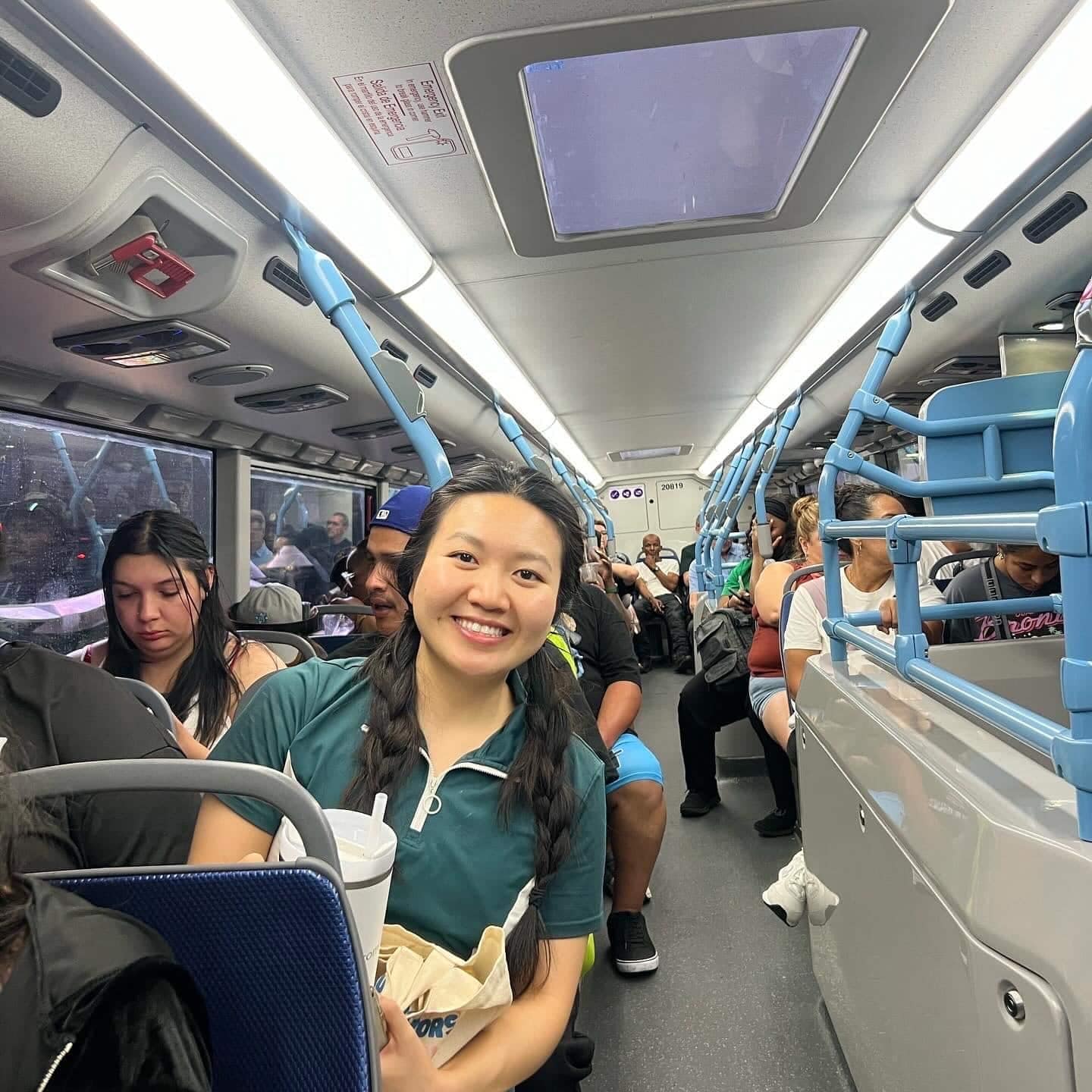
Hours of our lives are wasted stuck in dangerous traffic. Las Vegas is the only metropolitan city in the Mountain West that does not have a light-rail/metro public transit system. Our streets are unsafe for walking and biking, and for too many, a car is the only option. And owning a car is a huge expense that strains family budgets. Many elected officials talk about the cost of living solely related to the cost of housing as a common guideline that an individual should not spend more than 30% of gross monthly income on housing costs like rent or mortgage. However, in a car dependent city like Las Vegas, residents spend 30% of gross monthly income just on transportation. Therefore, if we want to lower the cost of living for locals, we must lower the costs of housing AND transportation by improving our transit system and building more housing near transit.
We’re stuck in a transportation system that isn’t working for us anymore as our population continues to grow and traffic continues to get worse. The cost of this transportation system is escalating rapidly, with residents staring how some of the highest gas and insurance costs as well.
As County Commissioner, Minja will fight through the bureaucracy to build a regional light rail system. Thirty years ago (in 1993), Clark County Commissioner Bruce Woodbury championed the vision of building I-215, the only locally funded freeway in America without any state and federal money. I-215 made today’s Vegas possible.
Looking forward to the next 30 years, we need to make a historic investment today to build a light rail system. The reality is that Clark County will not be able to continue to grow without a mass public transit system. While Phoenix, a hotter city than ours, has built 35 miles of light rail connecting riders to jobs and opportunity, we've fallen 20 years behind. While other peer regions like Phoenix, Denver, Salt Lake City, Dallas are investing in multi-modal transportation, Las Vegas is stuck in traffic.
Solution:
A Three-Part Strategy for a Connected Clark County
The plan doesn't just involve "building light rail", but rather combines comprehensive economic development and smart growth land use strategy with a rail transit spine.
1) The Infrastructure: A Phased Light Rail System for the Southwest: IKEA, Durango Casino, UnCommons, Costco, Town Square, Airport, Allegiant Stadium, and UNLV
This is a cross-county link that provides a real alternative to the 215 beltway. This will provide a fast, reliable, and car-free connection between where people live, work, learn, and play.
2) The Innovative Funding: Tax Increment Financing (TIF) District
The biggest question is always, "How do we pay for it?" We use an innovative model that does not rely solely on new sales or property taxes: Tax Increment Financing (TIF) district.
How It Works:
- We designate a "Transit Development Zone" along the planned rail corridor.
- We calculate the current property tax revenue generated within that zone.
- Once the rail project is approved, any future increase in property tax revenue from new development and increased property values within the zone is captured to pay off the bonds used to build the rail line.
The benefits of this approach include:
- Self-Funding: The rail system pays for itself by unlocking the massive economic value it creates.
- No Broad Tax Hikes: It does not require a general county-wide tax increase.
- A Magnet for Private Investment: It signals to the private market that we are serious about high-quality infrastructure, attracting immediate real estate and business investment.
This financing mechanism will minimize tax burden on local tax payers.
3) The Smart Growth: Transit-Oriented Development (TOD)
We don't want to just build a train to nowhere; we build vibrant, walkable neighborhoods to sprout around every station. Our policy will mandate and incentivize Transit-Oriented Development (TOD). In addition to the light rail spine, we also need to improve “last mile” commutes like buses, microtransit and walkable streets moving people from the light rail stations to their home and work. Once we build more TODs, we will achieve the bigger vision of “Transit-Oriented Community”.
Key TOD Policies:
- Up-Zoning: Allow for higher density (mixed-use buildings with apartments over retail) by-right in station areas.
- Reduced Parking Mandates: Significantly lower or eliminate costly parking requirements for developments near stations, reducing construction costs and encouraging walking/biking.
- Pedestrian-First Design: Mandate wide sidewalks, shaded plazas, bike-share stations, and safe crosswalks within a half-mile of every station.
- Affordable Housing Set-Asides: Set aside a portion of the funding to build new residential units in TOD zones to be priced as affordable for working families, ensuring the benefits of the system are shared by all.
How other cities structure TIF to fund a light rail project:
Different cities have used variations of TIF or similar tools, such as:
- Denver (Union Station): Used a combination of TIF and special assessment districts to fund station-area redevelopment and part of the transit infrastructure.
- Portland: Created urban renewal districts around MAX Light Rail stations; the increment funded transit-oriented development and infrastructure.
- Dallas (DART): Used Transit-Oriented Development (TOD) TIF districts to fund local improvements along light rail lines.
- Seattle & Minneapolis: Used value capture districts (similar to TIF) around transit corridors to reinvest in the light rail system.
The RTC's own studies and surveys (such as the Southern Nevada Strong survey in 2019 on Maryland Parkway) confirm that Clark County residents overwhelmingly support rail transit. Clark County has a $15 billion annual budget. The question isn't whether we can afford this investment, but whether we can afford not to. This is not simply a transportation issue, it is an economic development issue.
We cannot do economic development and continue to grow to 3 million people by 2045 without a robust public transit network system like a regional rail system. We don’t want to become LA 2.0. Here in Southern Nevada, locals are avoiding visiting our arts district, downtown, and the Strip because of traffic congestion and difficulty and expense with parking.
Southern Nevada also has some of the highest insurance costs in the country due to a multitude of factors, including high numbers of DUIs as well as our wide, high-speed unsafe arterial roads leading to more incidents of crashes. A high-quality mass public transit system will help lower insurance rates by giving high-risk drivers an alternative to driving without sacrificing their mobility.
We are not the only city in the country that can host conventions, concerts, and sports games. Other peer regions like Phoenix can do all of the above and they have a regional rail system that connects all of these economic hubs, their universities, libraries, stadiums, hospitals, and airports.
A regional rail system can improve connectivity among employees, customers and businesses by bringing people to jobs, and creating more spaces for business activity along transit hubs. It creates construction jobs as well as provides long term positive economic impact to attract more businesses and investment to our region. Southern Nevada is competing with other regions like Phoenix and Denver to attract young, good talent and companies in different industries. We need to have a regional rail network to maintain our economic competitiveness.
We need to take a bold step toward a more connected, forward-thinking future for Clark County, just like how we did in 1993.
Vegas was not built by thinking small. The question is not whether we can afford to invest in a light rail system - it’s whether we can afford not to.
Minja will also scale up efforts to expand RTC’s existing Complete Street and Multimodal Transit Program, add shade and improve lighting at bus stops, and expand more express buses like Centennial Express that connect the top destinations. Minja will advocate for the RTC to add express buses to connect Southwest to the airport, the Strip, Allegiant Stadium, UNLV, and Downtown LV.
Whether you drive, take the bus, bike, or walk, you should be able to get where you need to go safely and efficiently regardless of age or ability.
Housing
Problem:
Nevadans are being priced out of the American Dream. The people who make Las Vegas run—our teachers, nurses, service workers, and young families—are being squeezed out by soaring rents and housing costs.
Solution:
As County Commissioner, Minja will:
- Remove zoning barriers that limit the construction of smaller, more affordable homes for first-time buyers and young families with smaller household size.
- Eliminate wasteful parking minimum requirements, particularly near transit corridors, to let property owners decide how much parking is needed. This reduces construction costs, prevents huge, empty parking lots. Think about it: why is the parking lot in front of Walmart bigger than the store itself?
- Increasing lot coverage and reducing setback restrictions
- Reforming building codes to allow missing middle housing such as duplexes, triplexes, and townhomes to be built in non-master planned single family neighborhoods.
These policies will unlock more housing choices, increase supply, and lower costs for everyone.
Housing and transportation are two sides of the same coin. The true cost of housing is the cost of housing plus cost of transportation. For low- and middle-income families, transportation is the second-largest household expense after rent.
Where you live determines how easy or difficult it is to get to important places, like your job, your children’s school, hospital, or the grocery store, which in turn determines how much money you must spend on transportation. This concept is known as “location affordability.” Funding reliable, expanded transit will enable transit-oriented development, lower housing costs (by cutting residents’ transportation expenses), and create walkable neighborhoods.
Without reliable transit, families are forced to spend 25–30% of their income on car payments, gas, maintenance, and insurance, leaving less for housing. Affordable housing cannot exist without affordable transportation.
Community Safety
Problem:
Our current system is stretching our first responders thin by forcing them to be on the front lines addressing the mental health and homelessness crises. This diverts officers from responding to serious emergencies, violent crime and property theft. As the difficulty of hiring and retaining qualified peace officers continues, it is necessary to develop a smarter strategy to the variety of safety issues facing our community.
Solution:
Minja will champion to fund and scale teams of mental health professionals and paramedics to respond to non-violent mental health, substance use, and homeless crisis calls. This frees up LVMPD police to focus on violent crime and emergencies.
Minja will use proven urban design principles such as better lighting in parking lots, parks, and commercial corridors, clear sightlines, and active public spaces to make neighborhoods safer by design. Safety extends beyond crime to include our roads and our environment. As County Commissioner, Minja will work with Clark County Department of Public Works to redesign dangerous streets to allow all road users to feel safe and commit to the goal of zero traffic fatalities and serious injuries.
At the same time, she will invest in after-school programs, community centers, and youth job initiatives to provide positive pathways for young adults and interrupt cycles of violence and apathy.
Responsible Growth (Water and Public Lands)
Problem:
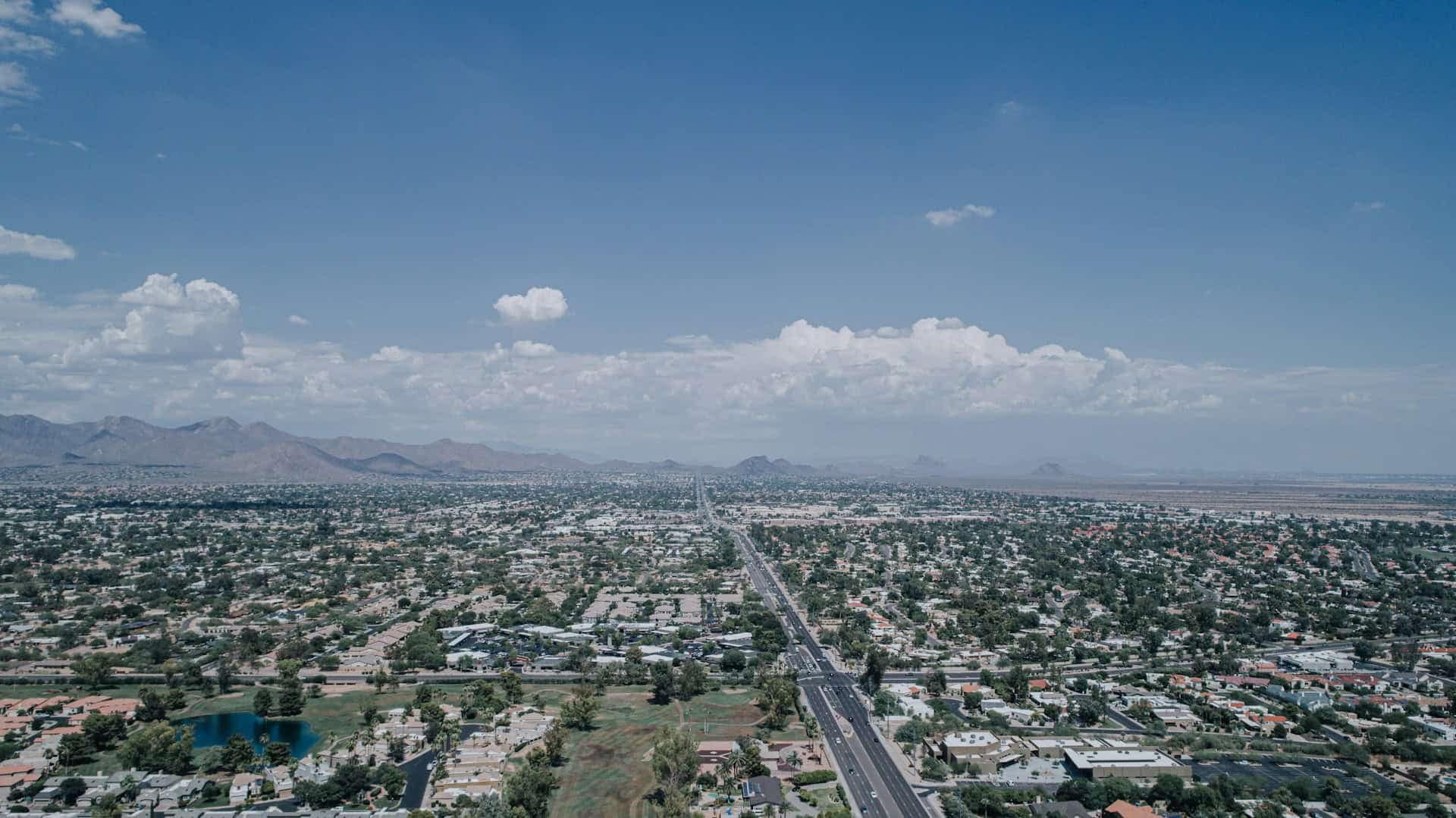
Lake Mead is only 30% full. According to a UNLV study, Clark County is projected to increase its population to 3 million people by 2050. We are growing in a desert with a limited water supply. Sprawling, low-density development consumes our natural landscape, increases car dependency, pollutes our air, and strains infrastructure. This type of development makes our continued growth more painful for the people who already live and work here.
1) Sprawl Is Expensive and Will Lead to Higher Taxes
Sprawl forces taxpayers to fund the maintenance of costly new infrastructure, services, and roads that are far from existing urban employment and transit hubs. These financial burdens divert funds from critical priorities like education, public safety, and healthcare. Municipalities are realizing that residential sprawl generates less tax revenue than it costs to build and maintain, leading to higher taxes or service cuts, disproportionately impacting older, rural, and underserved communities.
2) Sprawl Steals Resources from Affordable Housing
Because of how expensive it is, sprawl shifts public investment to newer low-density suburbs, leaving urban affordable housing and transit programs underfunded and deteriorating. Areas like downtown Las Vegas, Naked City, Maryland Parkway, downtown North Las Vegas, Charleston, East Las Vegas, Historic Westside, and Chinatown, have been historically left out and cut off from public investment.
The real cost of housing is the cost of housing plus the cost of transportation. Car dependency in sprawling suburbs forces low-income residents to spend a significant portion of their income on transportation and owning a car, making their cost of living even higher. More growth at the outskirts also contributes to more traffic and pollution in the center of town.
Solution:
As County Commissioner, Minja will implement smart land use and prioritize developments on previously developed, vacant, or underused land within the urban core of the valley instead of on raw desert public land on the outskirts of the valley.
In 2025 RTC of Southern Nevada released its underutilized land inventory study and found 78,000 acres of land within the SNPLMA boundary that can house infill development. That’s equivalent to the size of Henderson! Of this land, about 85% was classified as vacant. When we revitalize vacant lots, repurpose old buildings, upgrade parks and invest in existing neighborhoods, we create jobs, attract businesses, and boost local economies and tax revenues.
We don’t have a land constraint problem. We have a zoning constraint problem. And the lack of public transportation forces us to be a car dependent city that uses more land for parking lots than for housing!
Nevada’s public lands are our legacy and an asset. We can ensure we manage our water, protect our public lands, and build a resilient community for generations to come.
References:

Healthcare
Problem:
Las Vegas is known as a “healthcare desert”. Nevada has historically under-invested in medical education and residency programs. We don't train enough doctors here, and when we do, we don't have enough residency slots to keep them. Too many in our community struggle to see a doctor due to cost, distance, language barriers, or mental health stigma.
Solution:
Minja will build a community center with a health clinic in the southwest to serve District F’s rapidly growing number of residents. She will partner with the Southern Nevada Health District (SNHD) and University Medical Center (UMC) Southern Nevada to establish a full-service health clinic, offering everything from check-ups to counseling. UMC has Quick Care programs in many areas of the valley but not in the southwest yet. The closest one to the southwest is near Blue Diamond and I-15, dozens of miles away from residents of District F
For Chinatown, Minja will partner with SNHD and UMC to create a Federally Qualified Health Center (FQHC), a community-based clinic that provides comprehensive care to everyone and accepts all insurance (including Medicaid and Medicare). SNHD already has a few FQHC in low-income areas in other parts of the valley.
Minja will advocate to fund Community Health Worker (CHW) Programs that invest in trained local workers who bridge the gap between residents and the healthcare system. CHWs provide critical support by overcoming language barriers, helping with transportation, and guiding families through complex healthcare paperwork. Minja will also expand funding for interpretation services to ensure you can clearly communicate with your doctor and fully understand your care.
Minja’s vision is to build a Clark County where every resident can get the quality physical and mental healthcare they need, close to home. UMC is a Clark County funded public hospital and SNHD has two Clark County Commissioner seats on their board. Clark County Commissioners can influence healthcare services at the local level.
These are not new ideas. These services already exist in other areas of the Las Vegas valley. We just need to expand the programs to the southwest, the fastest growing area in the valley.
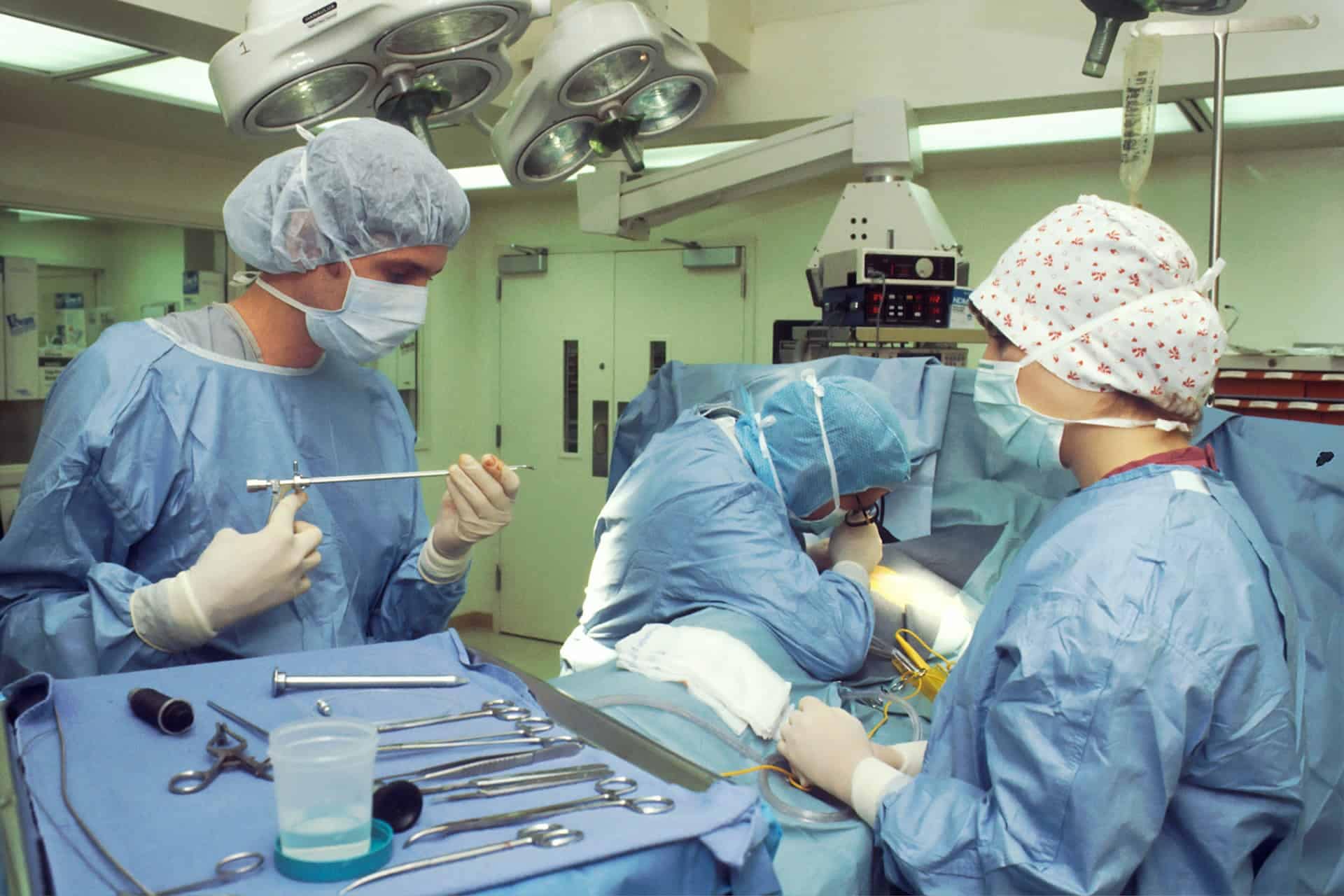
Under my leadership, Clark County will build a sustainable pipeline of healthcare professionals committed to serving our community. Minja will partner with UNLV, Roseman University, Nevada State University, and nursing schools to create more residency slots and training programs with local service requirements, and establish hands-on training programs at the new Southwest and Chinatown Community Center health clinics that we will build and other local facilities.
Education
Problem:
Recent investments into our public school system and improved teacher pay has finally unlocked some progress for our students, but Nevada’s education system still remains one of the worst-performing in the country. Our children are 20% of the population and 100% of our future. Minja will strengthen the partnership between our county government and school district to support our schools, empower educators, and create pathways to local careers.
Solution:
While funding for schools is an issue, simply increased funding alone is not the solution. Minja will partner with CCSD and local industries to create more career pathways in high-demand fields like healthcare and develop paid internship and apprenticeship programs with local businesses to create a pipeline of qualified workers for local employers.
The foundation for success begins before kindergarten. Minja will also invest in early childhood development to increase access to affordable preschool across the county. Early investment in childhood development leads to better academic outcomes and reduces future educational costs.
Minja will also work with Clark County’s Department of Road Safety to expand Safe Routes to School, implement traffic calming measures, crosswalks, and protected bike lanes around schools to protect our children.
Education isn't just a school district issue, it's a community issue and an economic development issue. The number one challenge that employers mentioned from moving into Nevada is public school quality and lack of local skilled talent. When our schools thrive, our economy thrives. Boston ranks #1 for biotech because they rank #1 in education, having the best universities like MIT and Harvard. We must think long term. Better schools equals a better economy. By strengthening the connection between our classrooms and our community, we can ensure every child in Clark County has the foundation they need to succeed and build their future right here at home.

Responsive Government
Problem:
Too often, our county government feels distant, bureaucratic, and unresponsive. Decisions seem made behind closed doors. It's time to end the era of government that you have to fight through to be heard.
Solution:
Minja will be a full-time Clark County Commissioner that is accessible, transparent, and accountable to you, not to special interests and lobbyists. Your government should be a partner in solving problems and make your life easier, not harder.
Minja will advocate to change the county's board of commissioner meetings to a weekday after work hours to allow more residents to come attend and provide public comments. She will also expand online options to make public meetings more accessible to watch and provide public comments.
Minja will bring the government to your neighborhood. She will host regular "Commissioner Office Hours" in libraries, community centers, and coffee shops across District F – no appointment needed. Clark County residents deserve a commissioner who is working full-time and directly accessible to hear your concerns and answer your questions, face-to-face. Minja will also schedule themed community meetings regularly on key issues like housing, traffic, and public safety, ensuring a consistent and open forum for dialogue.
I am not a career politician. I am your neighbor. Find me at the nearby boba tea and coffee shops in your neighborhood!
A responsive government is the foundation of a livable city. It builds trust, solves problems, and ensures that everyone has a fair shot. Minja is committed to be the most engaged and accessible commissioner District F has ever seen.